Türkiye
  • Global
  • México
  • 中國台灣
  • India
  • Indonesia
  • Türkiye
  • Việt Nam
  • ประเทศไทย
  • Brasil
  • Perú
  • Colombia
  • Argentina
  • Россия
  • السعودية
  • مصر
  • پاکستان
  • Malaysia
  • 日本
  • 中国香港
  • Philippines
İndirmek
Silicon Zeroes

Silicon Zeroes

89 Pozitif / 185 Derecelendirmeler | Sürüm: 1.0.0

PleasingFungus Games

Fiyat karşılaştırması
  • Turkey
    ₺233.06₺233.06
    Dükkana git
  • Argentina
    ₺130.49₺130.49
    Dükkana git

Silicon Zeroes'i GameLoop Emulator ile PC'ye indirin


Silicon Zeroes, PleasingFungus Games tarafından geliştirilen popüler bir buhar oyunudur. PC'de oynamak için GameLoop ile Silicon Zeroes ve en iyi buhar oyunlarını indirebilirsiniz. Al' düğmesini tıkladığınızda GameDeal'deki en son en iyi fırsatları alabilirsiniz.

Silicon Zeroes Steam oyununu edinin

Silicon Zeroes, PleasingFungus Games tarafından geliştirilen popüler bir buhar oyunudur. PC'de oynamak için GameLoop ile Silicon Zeroes ve en iyi buhar oyunlarını indirebilirsiniz. Al' düğmesini tıkladığınızda GameDeal'deki en son en iyi fırsatları alabilirsiniz.

Silicon Zeroes Özellikler

The makers of Manufactoria return with a new open-ended puzzle game.

  • Build complex electronics from a variety of simple components, like Adders, Latches and Multiplexers.

  • Travel back to the 60s to Silicon Valley's very first startup, and do your best to keep the whole thing from imploding.

  • Solve more than seventy puzzles, from straightforward introductions to building fully functional CPUs.

  • Original soundtrack by Craig Barnes, composer for Streets of Rogue and Enyo.

"The best game about CPU design that I can imagine​" -- Zach Barth (SpaceChem, TIS-100).

Daha fazla göster

Silicon Zeroes'i GameLoop Emulator ile PC'ye indirin

Silicon Zeroes Steam oyununu edinin

Silicon Zeroes, PleasingFungus Games tarafından geliştirilen popüler bir buhar oyunudur. PC'de oynamak için GameLoop ile Silicon Zeroes ve en iyi buhar oyunlarını indirebilirsiniz. Al' düğmesini tıkladığınızda GameDeal'deki en son en iyi fırsatları alabilirsiniz.

Silicon Zeroes Özellikler

The makers of Manufactoria return with a new open-ended puzzle game.

  • Build complex electronics from a variety of simple components, like Adders, Latches and Multiplexers.

  • Travel back to the 60s to Silicon Valley's very first startup, and do your best to keep the whole thing from imploding.

  • Solve more than seventy puzzles, from straightforward introductions to building fully functional CPUs.

  • Original soundtrack by Craig Barnes, composer for Streets of Rogue and Enyo.

"The best game about CPU design that I can imagine​" -- Zach Barth (SpaceChem, TIS-100).

Daha fazla göster

Ön izleme

  • gallery
  • gallery

Bilgi

  • geliştirici

    PleasingFungus Games

  • En Son Sürüm

    1.0.0

  • Son güncelleme

    2017-09-18

  • Kategori

    Steam-game

Daha fazla göster

İncelemeler

  • gamedeal user

    Nov 1, 2017

    Why buy this game? Well, "game" is a bit of an odd word for Silicon Zeroes. If I were to describe it, I'd say it's more a series of puzzles, tied together by a loose narrative. The puzzles are based on the workings of computer / electronic hardware. If you're interested in computers from that perspective, of course the game will be of value to you. The puzzles start out easy ("Here's how to connect components!") but then quickly ramp up in difficulty. For me, this has really been a "Stare at the problem for a while, leave it alone for a day or two, come back and make some progress, leave it alone again for a day or two" sort of process. It's a nice to have these little puzzles sitting in the back of your mind, something to ponder on the bus ride or on a coffee break. Then, when you finally solve the problem you get that "Ah ha!" moment that's so tremendously enjoyable. Note that you don't have to be a computer genius to enjoy Silicon Zeroes. I've never taken a computer course in my life, and I come from a non-science profession. For me, this game is really a set of logic problems, with the added dimension of time (clicks). Some of the reviews suggest the game helps explain how computer hardware works - if so, fantastic! But rest assured, you can easily approach these problems with a bit of plain old critical thinking and wit. Probably not for impatient audiences. This is not a game of instant gratification. But for the more intellectually inclined, Silicon Zeroes really provides a satisfying, fun experience.
  • gamedeal user

    Jul 7, 2019

    This is, to date, the least enjoyable entry in this sub-genre for me, with several major issues that prevent me from actually having a good time with it. First off, the cycle count requirements for completion are excessively strict. The designer has a very specific solution in mind for each puzzle (which is generally an optimal or near-optimal solution), and all but the smallest deviations will be met with failure. In other words, you have to devise a near-optimal solution to most puzzles just to advance, rather than optimization being something you pursue [i]after[/i] successful completion - not that optimization is all that interesting either in this game, due to the particular set of metrics solutions are judged on. As a result, there's very little reason to revisit completed puzzles, and you will almost never want to revisit a puzzle because a later puzzle taught you something you could apply to it. Having real-world knowledge of the subject matter is detrimental; many real-life solutions are not workable within the game's constraints, while some puzzles encourage degenerate solutions that would never fly in reality. The pacing is off, with new components frequently being added for a puzzle or two before being removed for many puzzles, before you've had an opportunity to get really comfortable with how they work. Then there are all sorts of minor interface issues. For example, a register file can contain between 1 and 8 registers, and the most generally useful size for a register file is 4 registers, so of course the default size for one is 2 registers. The game maintains an unnecessary separation between edit and sim mode, which is made worse by the fact that in some situations it will switch from one to the other as need, while in others you are required to switch manually. Wires become increasingly indistinct as you add more of them, which is made worse because you can't meaningfully group them into buses, and even when there aren't very many of them they're still not particularly distinct from one another, because they are distinguished only by color, and each wire's color is quite close to the previous wire's. The solution palette is a pain to manage - and you will need to manage it, because it will rarely be clear which sections of which solutions will and will not be useful in the future, and even when they [i]are[/i] useful, it's generally for only a small handful of puzzles.
  • gamedeal user

    Sep 19, 2017

    I was lucky enough to play this game while still in beta, so you'll see I don't have many hours officially logged, but I spent many hours with it. It's an absolutely *incredible* game. If you've played Kerbal Space Program, you'll know what I mean when I say how much more fun it is to play a game where you learn interesting new concepts while you play. This is like the KSP of computers. I'd say it starts a little dry, but stick with it. Once you get to the point where you're beginning to build a working processor, it'll blow your mind. Learned how to build a working computer processor. 10/10 would build again.
  • gamedeal user

    Nov 26, 2017

    had to break out my computer architecture notes to beat some of these puzzles. 10/10
  • gamedeal user

    Sep 19, 2017

    This is really fun and promising game, it is in the style of Shenzhen I/O but it is by itself a unique and very interesting. I think this will become very popular in the niche of programming/hardware puzzle games.
  • gamedeal user

    Nov 25, 2022

    First the straight up bad: the puzzles can be quite frustrating because the game has only 1 solution in mind. Worse, the game gives you tools in one level and then takes them away in another. So your brain might be figuring out how to solve the puzzle one way, but it's a dead end because the game doesn't let you do that in the current level, you've got to start from scratch and think about the solution in a totally different way. Now the comparisons: <*>Do you want good programming puzzles? Go play some Zachtronics games first (if you don't know where to start try Opus Magnum or Shenzhen I/O) <*>Do you want the best introduction to CPU architecture? Go play Turing Complete first In 2022, this game is B tier at best for the genre. Having gotten all that out of the way... if you've tried other games in the genre and you're looking for more, I highly recommend this game. There's a lot to love here. If you like the atmosphere and story of Zachtronics games, you'll feel right at home. If you're here to learn, this game has a lot to teach. It'll force you to think about solutions in new ways that no other game in the genre does. Take for example timing. In Turing Complete dealing with timing is a number (delay) that the game lets you optimize for, but it doesn't fundamentally change how you think about the solution. When you get to the later parts of this game, each component has its own delay and you have to be careful about indeterminate values before each component has settled. It turns timing into an interesting, complex synchronization problem, just like in real CPU architecture. Did I mention that by the end of the game you'll have built a CPU from latches up? The game UI for designing components is in many ways still the best in the genre. It feels like you're doing actual hardware design (compared to, say, the weird, disguised programming of some Zachtronics titles) but in a way that doesn't feel like you've turned work into a game (the literal programming in some Zachtronics titles, or the meticulous wire layouts of Turing Complete). Finally, the game feels like it was a labor of love to make. Plus the main developer behind the game is friendly and engages with the community in a supportive way, even after all these years since releasing the game. I hope we see more games like this in the future.
  • gamedeal user

    Oct 10, 2017

    Game about designing basic CPUs from basic components such as adders, (de)multiplexers, latches... Starts slow (counters, memory access) and builds up quickly (instructions, clocking, pipelining) Pros: - Pretty rewarding, especially if your solution is more optimal than developer's (yes, it is possible!) - Teaches about principles of CPU design intuitively without mentioning it - Good choices of puzzles, relevant to actual CPU architecture, not just pointless challenges Cons: - A bit short, expecting more puzzles to be added in updates - Some lower level components would be nice (e.g. logic gates would be useful in some puzzles)
  • gamedeal user

    Dec 28, 2020

    I agree with every negative review as well. It's very clear the game is looking for one, optimal solution. There's no room to experiment, no room to have a correct but slower solution. So many times have I had a puzzle where I just needed a tick or two more and it frustrated me to no end. I also strongly dislike how little things are explained, or how little exposition there is, or how things are introduced only to be taken away from the rest of the game, or how tons of the scenarios are "hey go do this, figure it out chump" and you're just like huh?? Obviously people like this game, and I'm glad. But this game honestly made me feel really stupid for not thinking exactly like the developer despite coming up with viable, albeit slightly slow solutions.
  • gamedeal user

    Nov 24, 2019

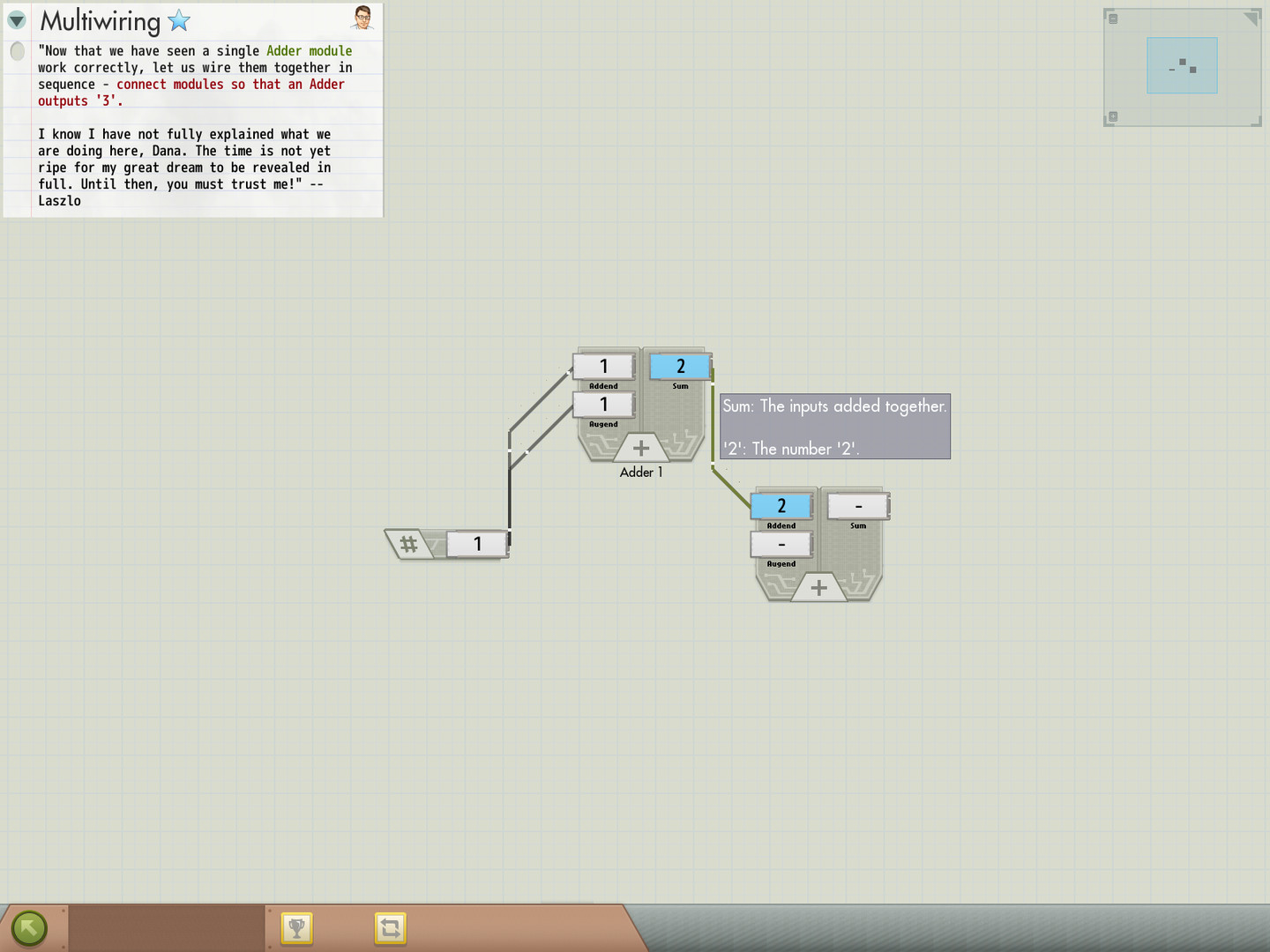
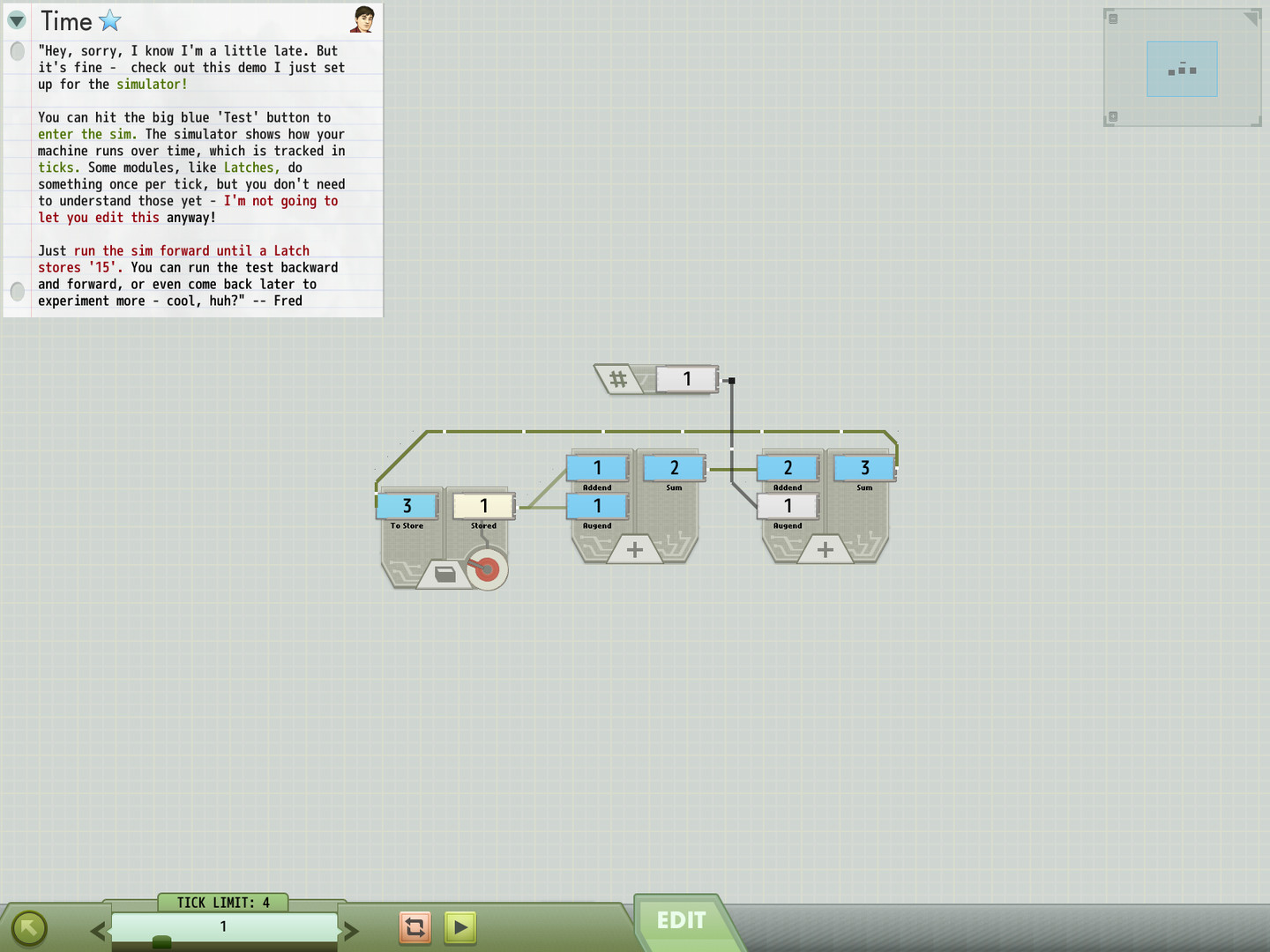
    Before I begin, I was a computer programmer in the I.T. field for 20 years. I have little to no experience in actual electronic design. I mention this on the off-chance this could prejudice my opinion and I have enabled comments for people to call me out on that. I believe when you start any sort of game, be it a shoot'm-up style, an RTS, or a sandbox, you have to know what you're doing with the basics. For example, if you are told to shoot at something, it would be nice to know how to aim and press the trigger on your gun first. You shouldn't be given the gun and then told, "figure out how to use it". Let's take an RTS as another example, like Starcraft or Warcraft. You're told what each of the buildings and units do, before being told to take out an enemy base. I mean, c'mon, would you try building a house without knowing how? Foundation? Wiring? Plumbing? Drywall? Silicon Zeros is a good game but it has an absolutely terrible way of getting you started and that ruins it right there. I mean, it started off right with the introduction: I'm a student named Dana who was hired by a startup company in the 1960's to help said company get off the ground. Where it goes off the rails is during my first request to make sure the adders are working. In order to confirm this, I'm told to configure the wiring so the adder output is 2. Okay, first of all, how does one use an adder? Yes, it's obviously an addition unit that formulates a sum but I don't know how to use it. I try right clicking the fields and am told in the hottip text there's nothing there. Well, YES! I can see that! I'm trying to put something IN there! I then click on the nearby tag with the 1 and learn that's a constant output value of 1. I dragged a wire from that tag to one of the two fields and got one of the two values in there so I'm half done...but I need another output .....perhaps another 1 outputter? Sure, but where the hell do I go to get that? I mean, I'm struggling with this like some caveman being asked to make fire with dry twigs. I'm clicking with all three buttons on my mouse to find a way to change the output of that tag with no success. It was through an accidental dragging of a wire during frantic clicking that I found you can split the wire and connect it to both add fields. Now we have 1 + 1 equaling 2 and the puzzle is solved. Or did I solve it? I mean, the infinite monkey theorem states that a monkey hitting keys at random on a typewriter keyboard for an infinite amount of time will almost surely type any given text, such as the complete works of William Shakespeare. In other words, even the dumbest person with tons of time WILL complete what was asked...but will he or she UNDERSTAND what they did and why? That was not the impression left in me. On to the next puzzle. Two adders, one outputter of 1, wire them to have the final sum add up to 3. All right, what are the rules of wiring these things in serial? How many wires can I attach to each module and where? Again, trial and error to generate some sort of outcome. There's no real planning based on an understanding. I'm trying to drag a wire from one of the first adder's input field to the second adder's upper field but I kept breaking it instead of branching it. I went back to the output field of 1 and was able, again through desperate guessing, to create and drag a third wire OVER the first adder to the second adder's upper field and the sum result of the first adder wired to the lower field of the second adder. Okay, that worked, but what a way to learn! The third puzzle was more of the same guess and go. Try wiring things to get an outcome rather than, you know, explain through examples on how things work. Next puzzle, the configuration one, reveals that the right click functionality of the outputter tag was in fact TURNED OFF in the first puzzle. Yes, apparently my right clicking from the first puzzle was the correct thing to do after all, but because it was disabled, I assumed it was wrong to do that. Now I'm wondering just how much of the full functionality of the game was switched off and as I progressed further, it was a great deal. Apparently you can add more than one number tag outputter after all. There are also other kinds of modules, like subtract and equal that were also hidden, and in some puzzles, hidden at the wrong time when really, they should be available. The Cow puzzle for example could have used the equal module to really simplify things to get the total number of calves born. This guesswork approach of learning is not good for another reason. You're not getting taught the really important things needed for more complex circuit design...like how to create a repeating loop, how long a tick is, how to work with timing in parallel wiring and so forth. These things, much like everything else, is left to guesswork for you to perform. If there was a sandbox to experiment in with all the available parts, I'd be more forgiving. As of this writing, I haven't found one and I'm not sure if the game, unlike others like Opus Magnus and Shenzhen I/O, has one available. It could be unlocked after some progression in the game, but I think that's a mistake to do that. Learning is not guessing, it's imparting knowledge through rote of example. Explain what, how, and why this is so. As I said, this is a really good game but it trips up horribly on the way it introduces people to the game concepts. It should take cues from other circuit design puzzles like Ones and Zeroes (another Steam offering) through a gradual stepped learning curve that builds on the previous lessons taught. If you are patient and willing to put up a lot of aggro trying to learn through this method, perhaps you will get a lot more out of Silicon Zeroes than I did in my initial efforts.
  • gamedeal user

    Sep 19, 2017

    Great Game! I always wanted to learn how to build a CPU. Honestly this game is similar to Kerbal and infinifactory where you really learn somthing from the game. Well done!
Load More

SSS

PC Games Cheaper On Gamedeal | Find The Best Deals of Games Here!

Finding the right place to get the best game deals can prove to be quite a hassle when comparing game prices on multiple sites. However, you can skip through all the trouble by letting Gamedeal handle the price comparisons and grab only the best deal prices for you!


We compare game prices on all the trusted storefronts and list game deals starting with the lowest price possible at the moment. Looking for something more specific? Search it on Gamedeal and find all the best deals and cd keys discount codes to make the most out of your bucks. 


Not sure what you looking for? Browse through our massive library of games from different genres to find epic deals for your favorite games from the biggest retailers in the market. Can’t afford the game you are looking for? Make sure to wishlist it and stay up-to-date with all the price changes in the future.


Say Bye to Hefty Game Deals!

Gamedeal is your one-stop shop to find all the best deals from your favorite retailers including Steam, Epic Games, Gamestop, and many more under one roof. Looking for games that cost you nothing? We have got you covered with our free games list that includes free PC and Playstation games.


We help you stay on top of the news with upcoming Steam sales and Gamestop promo codes to ensure you get the game of your choice at the lowest price possible. From old-school classics to modern AAA titles, there is something for everyone to play here.

Daha Benzer Oyunlar

Hepsini gör
Kurmak için tıkla