[h1]The King of Medieval township games[/h1]
I really like medieval games that feature hard labour instead of wizards and magic. I've tried Banished and Foundation, and while these games were [i]good[/i], Ostriv comes along and smacks them both.
There are a few cool features that I didn't see listed in the game description or from reviews so i'll state them now before getting stuck in.
[h1]Amazing Animations[/h1]
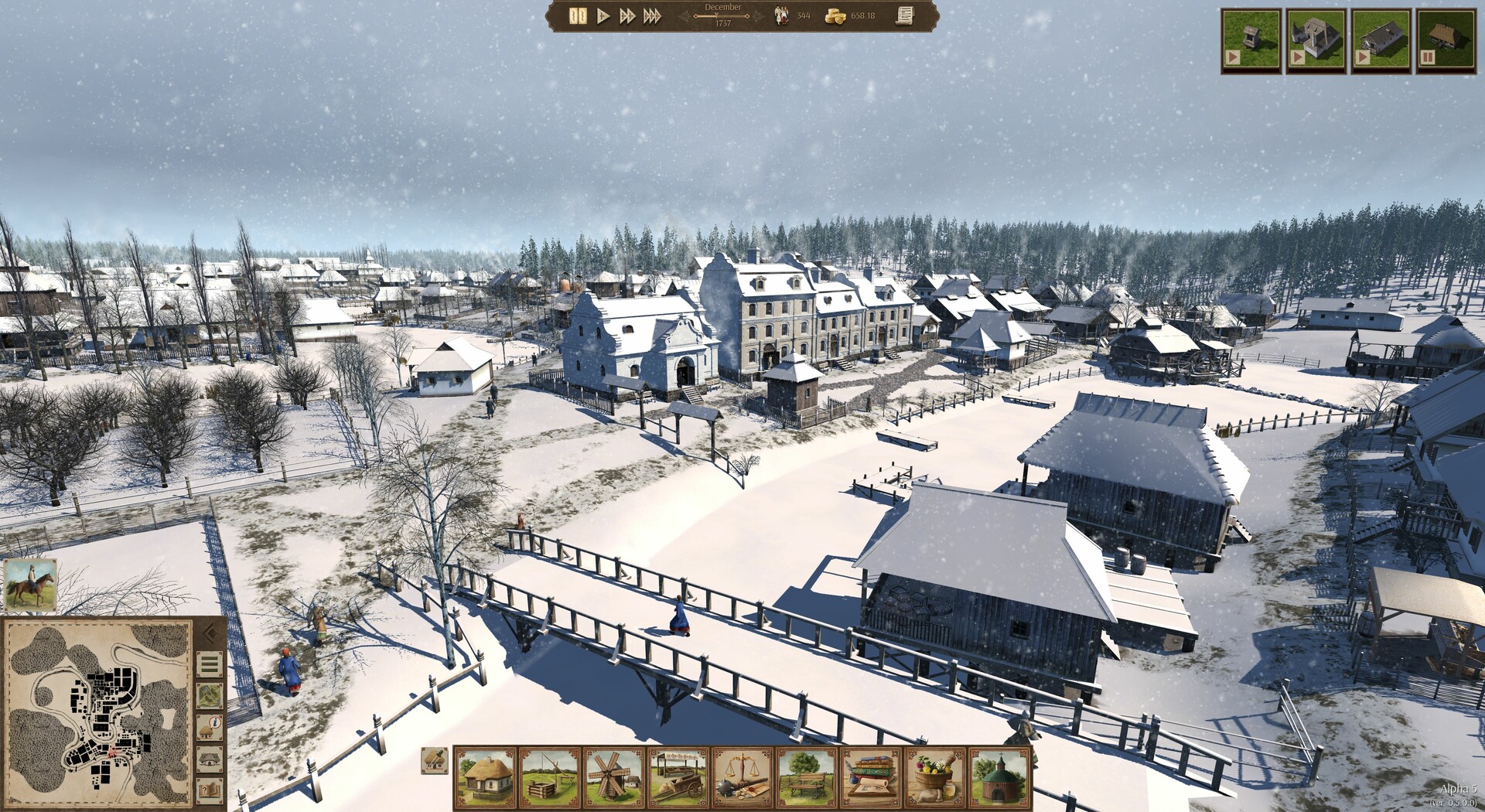
I was immediately blown away when I saw the first buildings going up. They are animated PIECE by piece, meaning you get to see every panel, plank & clay wall being put up. This must be utterly painstaking to animate and plan for in the modelling process. Foundation, timber and then interior walls - you gotta see it in action.
There's no 'banging a corner with a hammer', each part of the building is carried (by hand, cart and eventually wagon) to the construction site, and then erected by the workers once all materials have been received. I LOVE when games do this, it gives a real sense of immersion. Bravo to the solo developer for these amazing animations. It's even better than Soviet Republics construction process.
[h1]Farming and Soil management[/h1]
Your farms take a little bit of planning in Ostriv due to crops eating the plotted farms nutrition. You have to cycle between crops to not use up the fertility of the fields. If you do, you have to miss a year by making the field fallow so the fertility can regenerate. Fallow means dead for those who don't know.
Thankfully, when you eventually get livestock - you can set your animal barns to use these fallow fields to help with the regeneration. Also, when you have ploughs (you need animals for them), ploughing makes fertility more efficient.
It may sound daunting but it's really not, I highly advise looking on the wiki for a great image of meta crop cycles. Make this the first thing you do if you want to get stuck in.
Using cattle to help the farms is an awesome feature, If you have a full farms on the go you can also make dedicated pastures for them. It's a simple toggle switch on the animal buildings to 'allow fallow field pastures'.
[h1]Modular Housing[/h1]
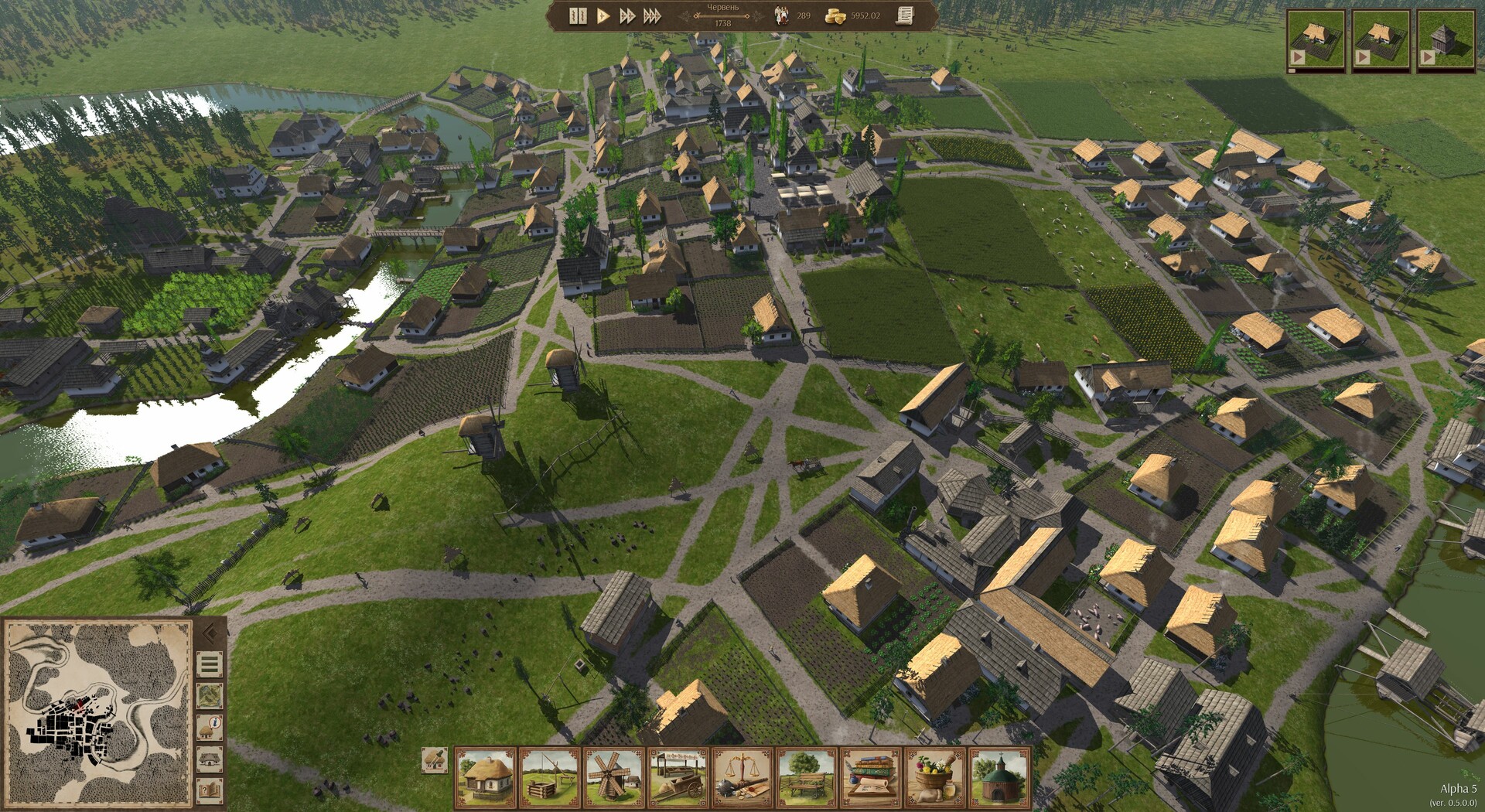
There are two choices of houses in this game, one is just a house by itself and the other contains a garden. The garden house allows you to not only move the house in the construction plot via pins, but also you can move the fences too which allows custom garden sizes and shapes.
This lets you have beautiful housing sections in your town, and the gardens are important because the villagers will grow their own crops/food in their plots for themselves. You can also set your granaries to buy from locals for their sweet vegetables/honey at a cost of course. A very organic and cool system, probably my favourite if I had to say.
No need to painstakingly decorate each house with fences/plants because the villagers do it for you. Houses look organic all fenced together with plants/food growing - it's very satisfying right out the gate.
[h1]Dynamically formed paths[/h1]
I've seen this in Foundation but Ostriv does a better job. There's no need to plot paths as your villagers will wear down the terrain to form eventual paths. This gives your village another +1 in the organic-look department.
Worth highlighting because it's just another immersive feature in the game. I'm fairly certain paths fade too, so if you have built something afar, it will eventually settle back down to one singular main path, rather than all the trails from the construction workers, if that makes sense.
[h1]Easy villager & Job management[/h1]
I liked Banished but juggling labourers and active jobs became very annoying in the mid game. Ostriv keeps it simple by having labourers as a separate type of job. You assign paid workers to buildings, but labourers are basically freelance workers that automatically are called upon once needed from your unemployed pool; They are useful for a lot of buildings!
These guys are the life savers of your farms and transport related buildings (Moving food/items etc). Charcoal burners for example, do not have a dedicated job-slot so are reliant on labourers. It just feels right, and how a village would be run. There's no annoying gaping holes in the workforce like in Banished.
Initially when you start you may struggle with people leaving jobs, but with the Town Hall you can adjust wages up a few % so people don't leave critical roles (Farm Manager, Boat builder, 2 Lumber dudes). Just keep building houses so you have labourers ready to slot in when needed.
Certain job roles can only be performed by men, which leaves a large women labour-force. I highly recommend using women for Granary work/markets/farm labour. It's good to have a few unemployed women for these purposes. The town hall will allow you to see the unemployment rate.
[h1]Villagers are named and are smart[/h1]
I like it when NPCs are named and have families in games. They grow old and die and their kids take over. Time passes month to month for a whole year in Ostriv so granted this takes a while. Your villagers go about their business each day and also take rest which is essentially the games form of sleeping.
Fun random praise: BENCHES are actually animated and are functional for resting periods. I haaaate when city builder decoration objects are not used and accounted for mechanically! So bravo again for this.
Villagers will go to your markets to buy food and clothing (important, because if they don't have clothes, they'll move out) and do their job. They can become destitute if they don't earn money, but you can throw them 5.00 coins to sort them out if you desire.
They will complain about lack of food variety but I don't think there are any adverse effects or happiness stats/efficiency mechanics yet. As long as they have food you're good.
[h1]It never feels easy, in a good way[/h1]
Foundation & Banished kind of reach a point where things are easy, you have huge surplus of everything, but there's a sense of dread every year in Ostriv. Do we have wheat for the animals? Sunflowers for selling?! Did I remember to check the farm cycles before spring?
There are finite elements of the production processes in this game. Limestone is limited which is used a little later into your villages life, and things like salt/cloth production are reliant on a mid/late game product-chain.
You HAVE to trade Iron because there are no iron deposits or infinite mines [yet?]. I kind of like this as trading is essential for survival at times. My tanners are slow AF so I'm always buying in Iron & Leather because the curing process takes 6 months and metal is always being produced for cart repairs and horse tack stuff. You will need to buy buy buy. Thankfully everything is cheap and you never feel too cheated.
Trading really feels like medieval trading like a real village would of done back in the day [i'm assuming]. You can also sell stuff to other villages with trade posts/docks. Buying livestock, selling stuff you've grown/made.
My tip for you early would be to invest in sunflower oil. Grow sunflowers, make them into Oil & Sell. It's the easiest of the trades and if someone wants 3000 Oil, it's a good 400 coins which is very good; this leads me into my next segment...
[h1]Productions feel limited & Trades can be difficult early on[/h1]
For now, the game is heavily reliant on food and animal produce for trade goods. Despite what I said about liking trading, I really hope there are some more early game options such as foraging and creating low-tier products for sale.
A starting village won't have much to trade. The best basic thing I've found is Charcoal, and eventually Sunflower oil. Charcoal is pretty much unlimited due to the foresters being able to build sustainable tree-nurseries which in of itself is another great mechanic in this game I wanted to fit into this review.
I have to cut this short but AMAZING game, lots to come and it's in active development.